

Against the backdrop of increasingly strained global water resources, the efficient conversion of seawater into freshwater has become a topic of significant concern.Seawater desalination equipment, as an advanced technological solution, is providing a reliable freshwater supply for many arid regions and coastal cities.This article provides an in-depth exploration of the working principles, technology types, application scenarios of seawater desalination equipment, and its critical role in sustainable development.
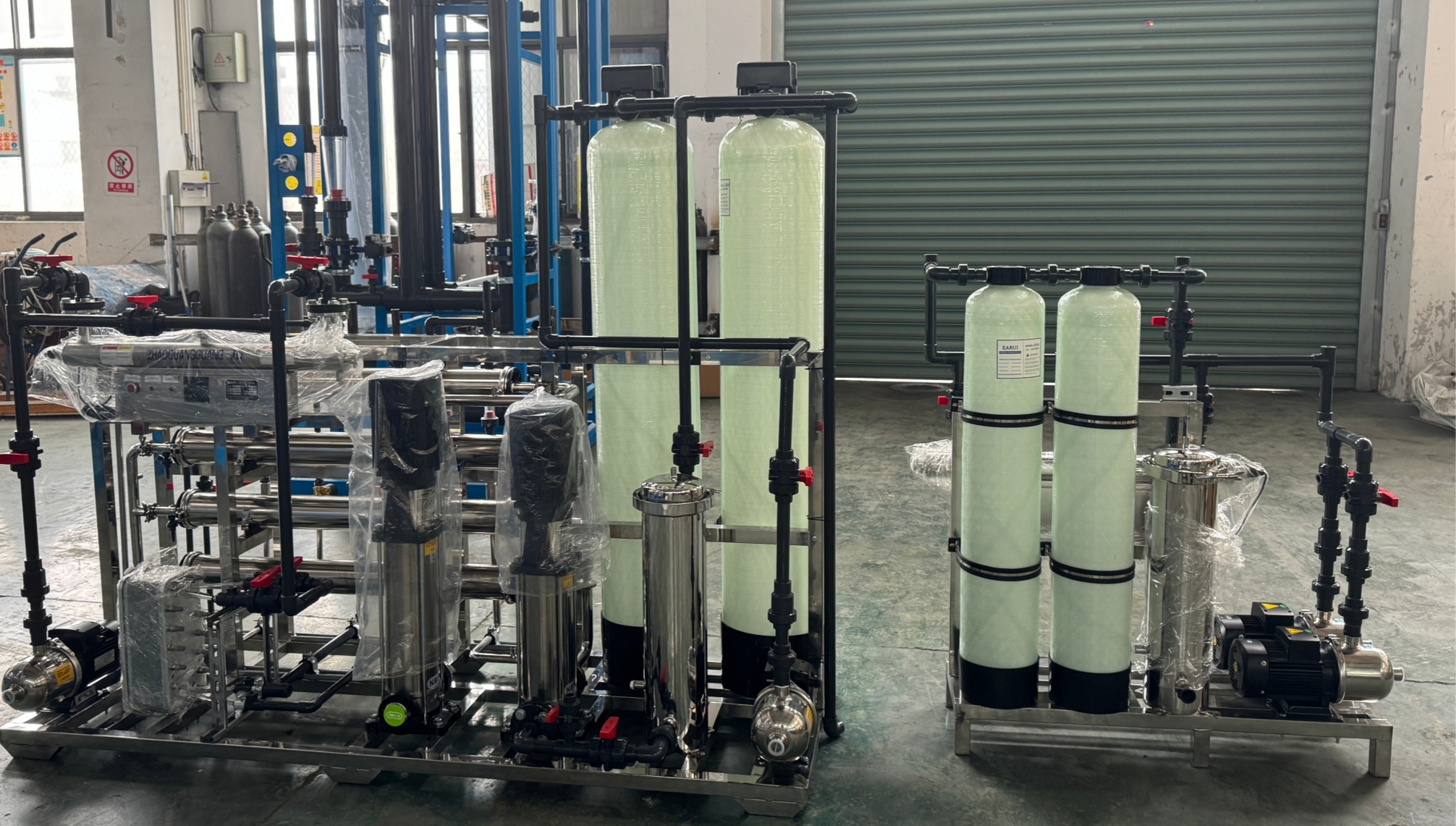
Working Principle of Seawater Desalination Equipment
The core objective of seawater desalination equipment is to remove dissolved salts and other impurities from seawater through specific technological means, thereby producing freshwater suitable for human consumption.Currently, the main seawater desalination technologies include reverse osmosis system and distillation.
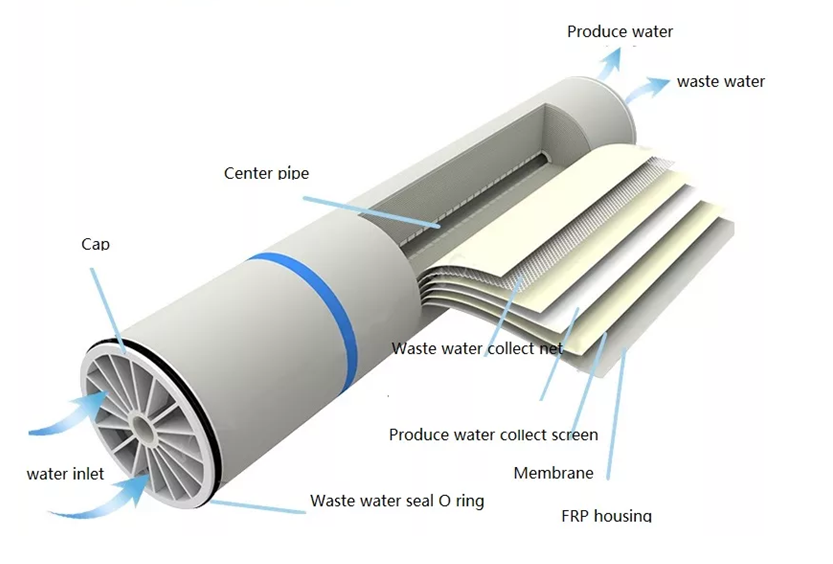
Reverse osmosis (RO): This is currently the most widely used seawater desalination technology.Its principle is to use high pressure to force seawater through a semipermeable membrane, where salts and other impurities are retained, while pure water molecules pass through the membrane to the freshwater side.The reverse osmosis method offers the advantages of relatively low energy consumption and a compact equipment footprint, making it well-suited for large-scale applications.
Distillation: Distillation is a process in which seawater is heated to evaporate, and the resulting vapor is condensed into fresh water.Distillation, despite its long history of application, suffers from high energy consumption and is typically used for small-scale or special-purpose seawater desalination scenarios.
Technology Types of Seawater Desalination Equipment: Based on different technical principles, seawater desalination equipment can be classified into the following categories:
Reverse osmosis system equipment employs reverse osmosis technology and is designed for large-scale seawater desalination , making it the mainstream product type on the market today . Its core components include a high-pressure pump , RO membrane elements , and an energy recovery device.
Multi-stage flash distillation (MSF) equipment is a distillation-based seawater desalination technology that progressively extracts fresh water through multi-stage evaporation and condensation processes. MSF equipment is highly suitable for energy-rich regions, such as Middle Eastern countries.
Electrodialysis (ED) equipment utilizes an electric field to separate salts from seawater through ion exchange membranes. This method is suitable for the desalination of low-salinity seawater.
Application Scenarios of Seawater Desalination Equipment: Seawater desalination equipment has a wide range of applications, primarily in the following areas:
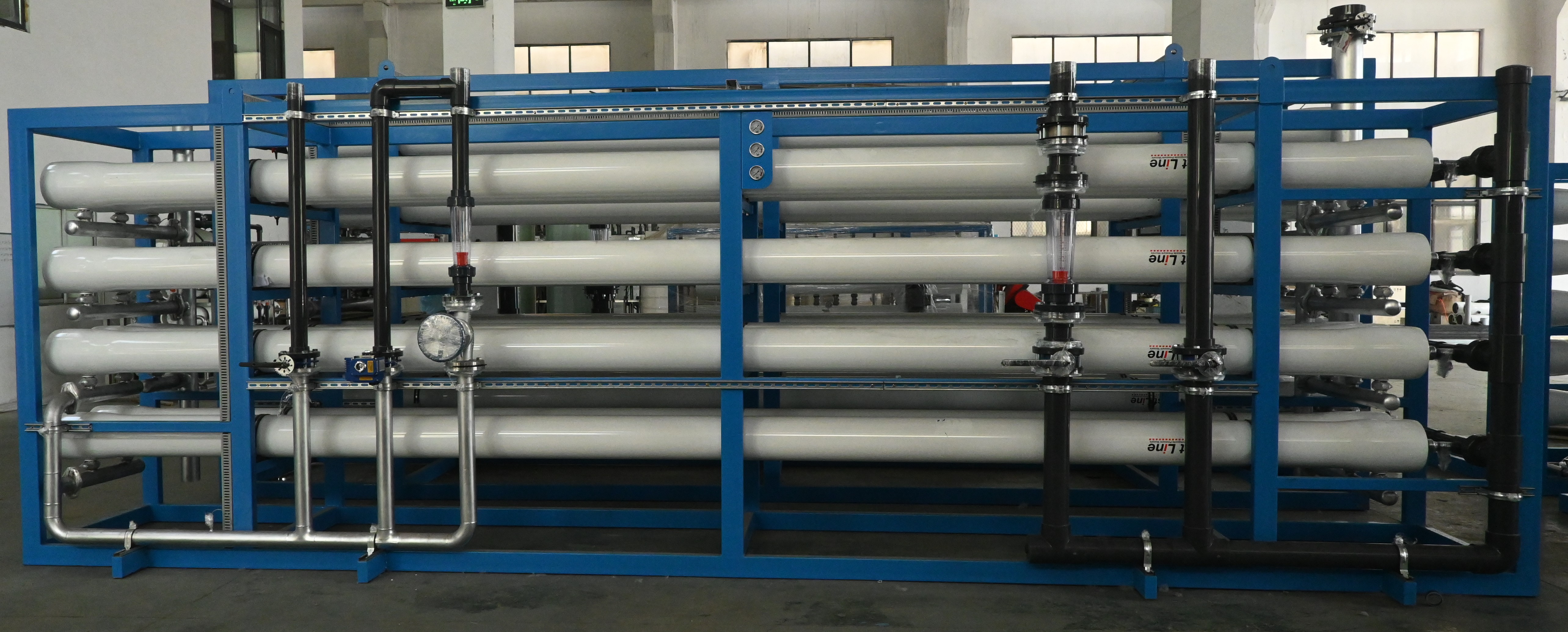
Municipal water supply for coastal cities: Many coastal regions, due to the scarcity of freshwater resources, rely on seawater desalination equipment to provide daily water supply. For instance, in Middle Eastern countries such as the United Arab Emirates and Saudi Arabia, seawater desalination equipment has become their primary source of freshwater.
Island Development: For islands far from the mainland, seawater desalination equipment is the optimal solution to address freshwater supply challenges. Through compact, small-scale systems, it can provide a stable water source for tourism or local residents.
Industrial Water: Certain industrial processes require large volumes of high-purity water, and seawater desalination equipment can provide high-quality water resources for industries such as petroleum and petrochemicals.
Emergency water supply: In natural disasters or emergency incidents, seawater desalination equipment can serve as a temporary water supply solution to meet the basic water needs of affected areas.
The Role of Seawater Desalination Equipment in Sustainable Development
As global climate change and water scarcity intensify, seawater desalination equipment is playing an increasingly vital role in sustainable development.First, it can effectively alleviate the pressure of freshwater scarcity , particularly in arid and semi-arid regions.Second, by optimizing energy consumption and adopting renewable energy sources ,modern seawater desalination equipment is progressively reducing its environmental impact.For example, some systems integrate solar or wind energy to further reduce reliance on conventional energy sources.
However, seawater desalination equipment also faces several challenges, such as high capital and operational costs, energy consumption issues, and brine disposal.In the future, with continuous technological advancements, these challenges are expected to be better addressed.
Future Development Trends of Seawater Desalination Equipment
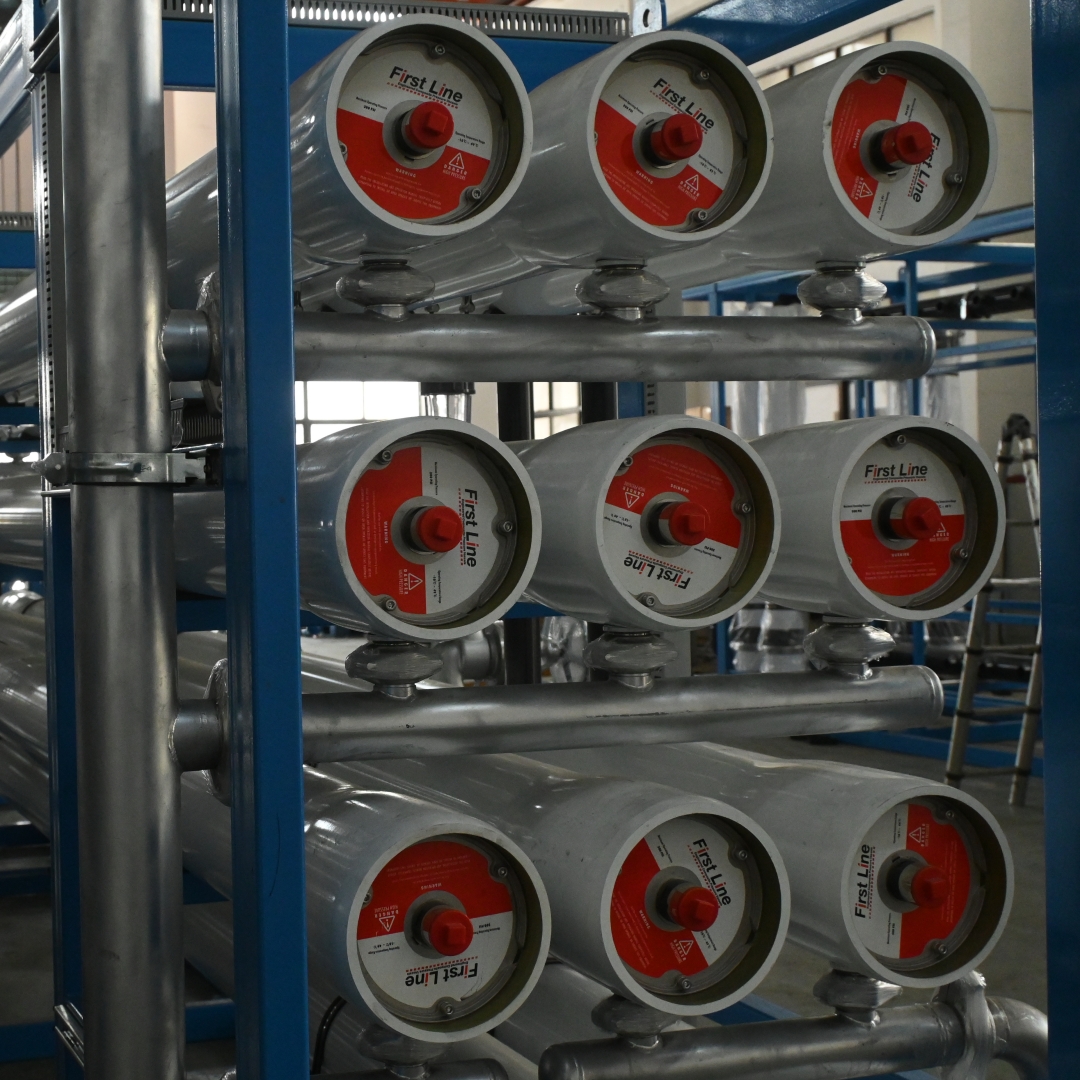
In the future, seawater desalination equipment will develop towards greater efficiency, intelligent operation, and environmental sustainability.High-performance membrane materials , intelligent control systems , and the integration of renewable energy sources will further enhance the performance and sustainability of desalination equipment.
In addition, modular design and compact, small-scale equipment will also provide flexible seawater desalination solutions for a broader range of scenarios and applications. Seawater desalination equipment, as an innovative technology, not only provides a practical solution to global water scarcity, but also makes a significant contribution to the realization of the Sustainable Development Goals (SDGs).With continuous technological advancements and increasingly widespread applications, seawater desalination equipment will play an even more critical role in the future.