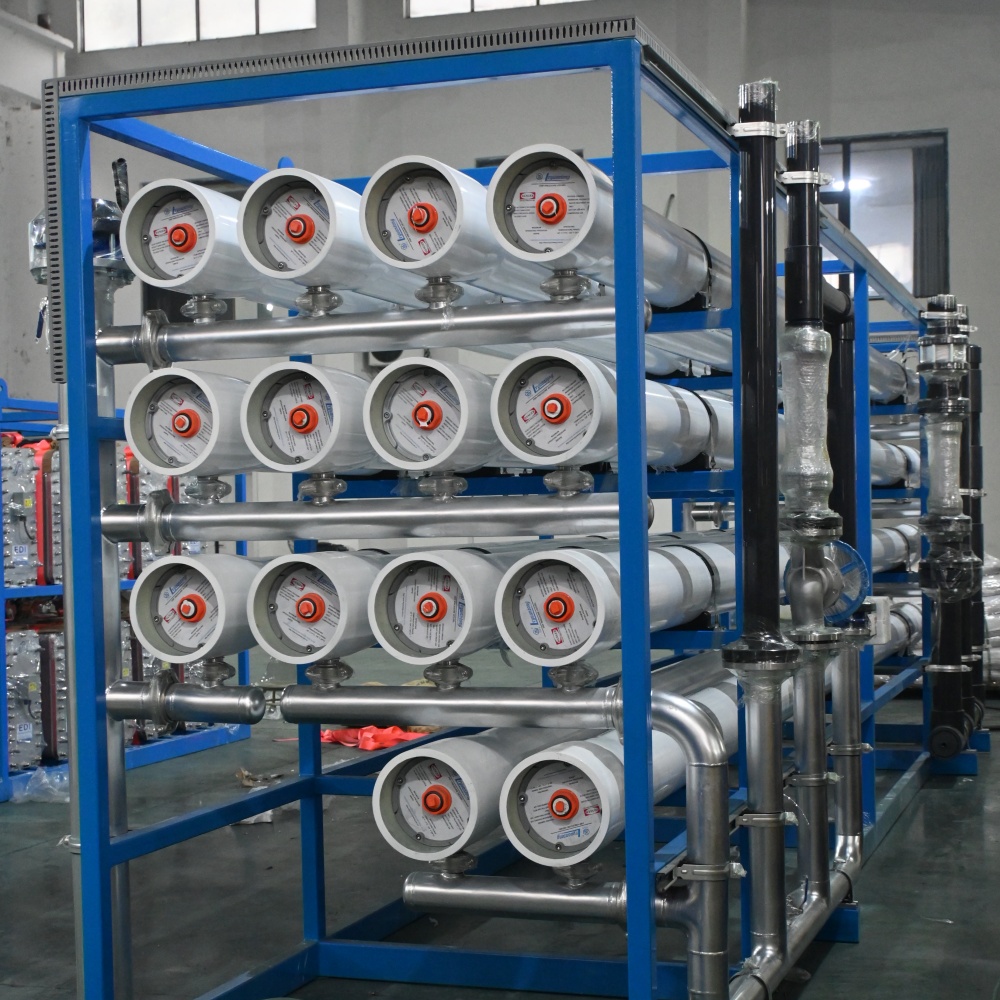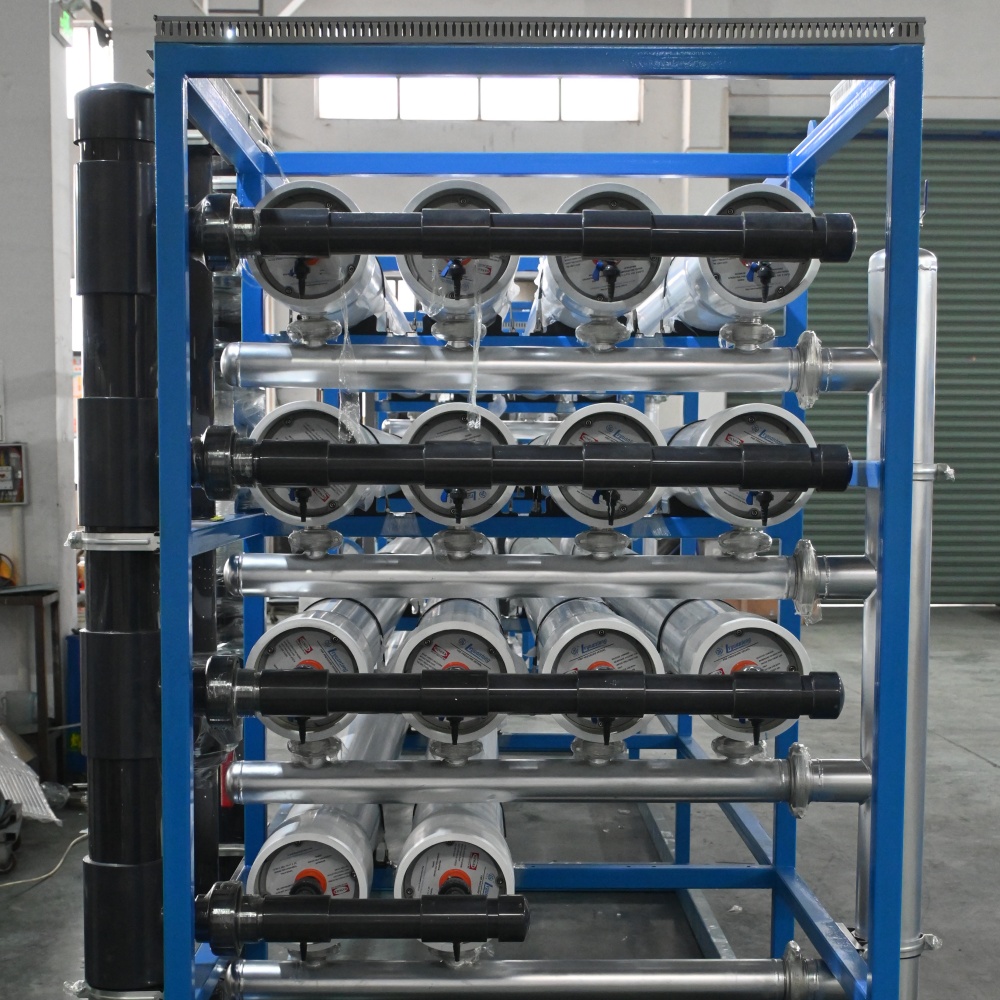
Single-Stage Reverse Osmosis System
A single-stage reverse osmosis filtration is applied to the raw water, removing most of the dissolved salts, colloids, suspended solids, bacteria, and other impurities, producing primary purified water that meets general water demands for production, cleaning, cooling, and other routine applications.
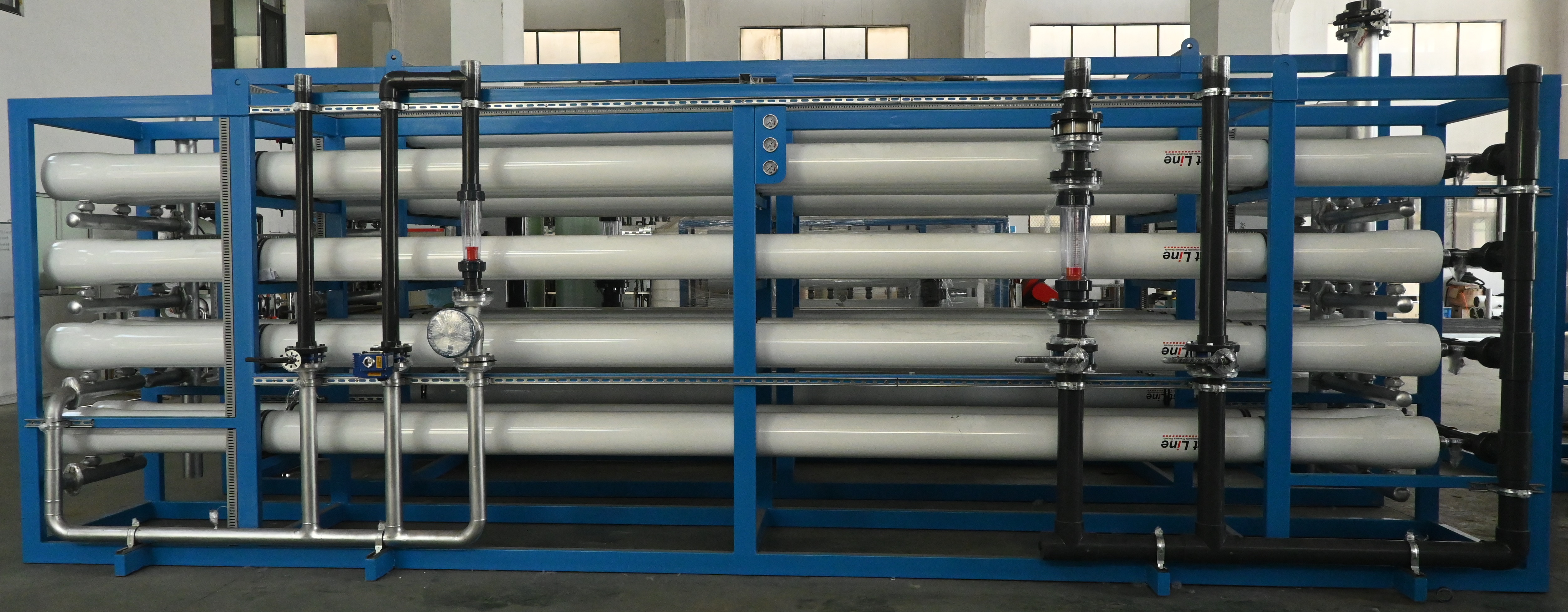
Double-Stage Reverse Osmosis System
The permeate from the primary RO is subjected to a secondary deep purification through another reverse osmosis membrane . This process further reduces the conductivity and total dissolved solids (TDS), typically achieving effluent conductivity below 5 µS/cm, resulting in higher and more stable water purity . Such high-purity water is widely required in industries with stringent water quality standards, including food and beverage, cosmetics, pharmaceuticals, and electronics manufacturing . Furthermore, this secondary reverse osmosis stage serves as an essential pretreatment system step for the production of ultrapure water (UPW), providing optimal feed conditions for subsequent polishing technologies such as electrodeionization system or mixed bed ion exchange.
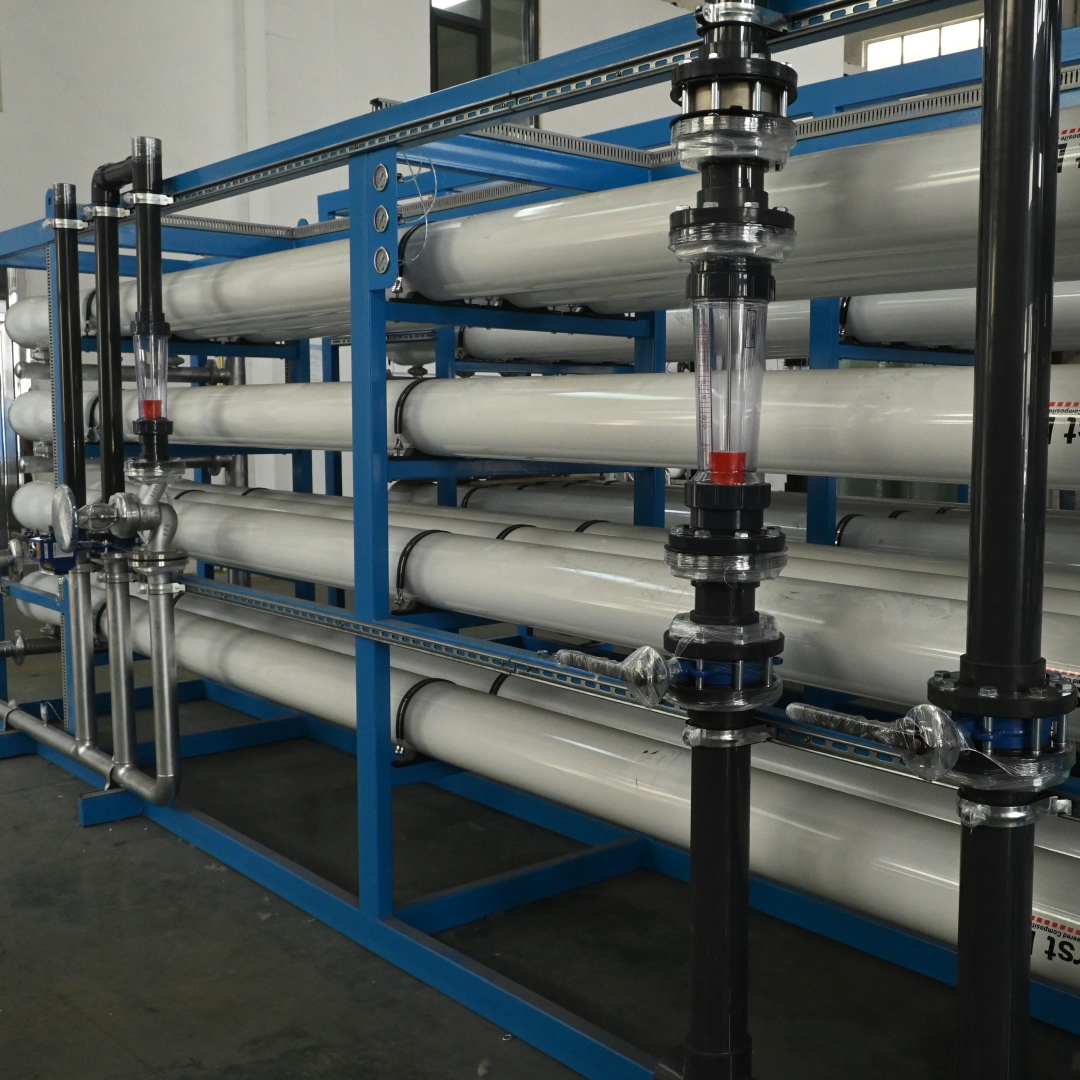
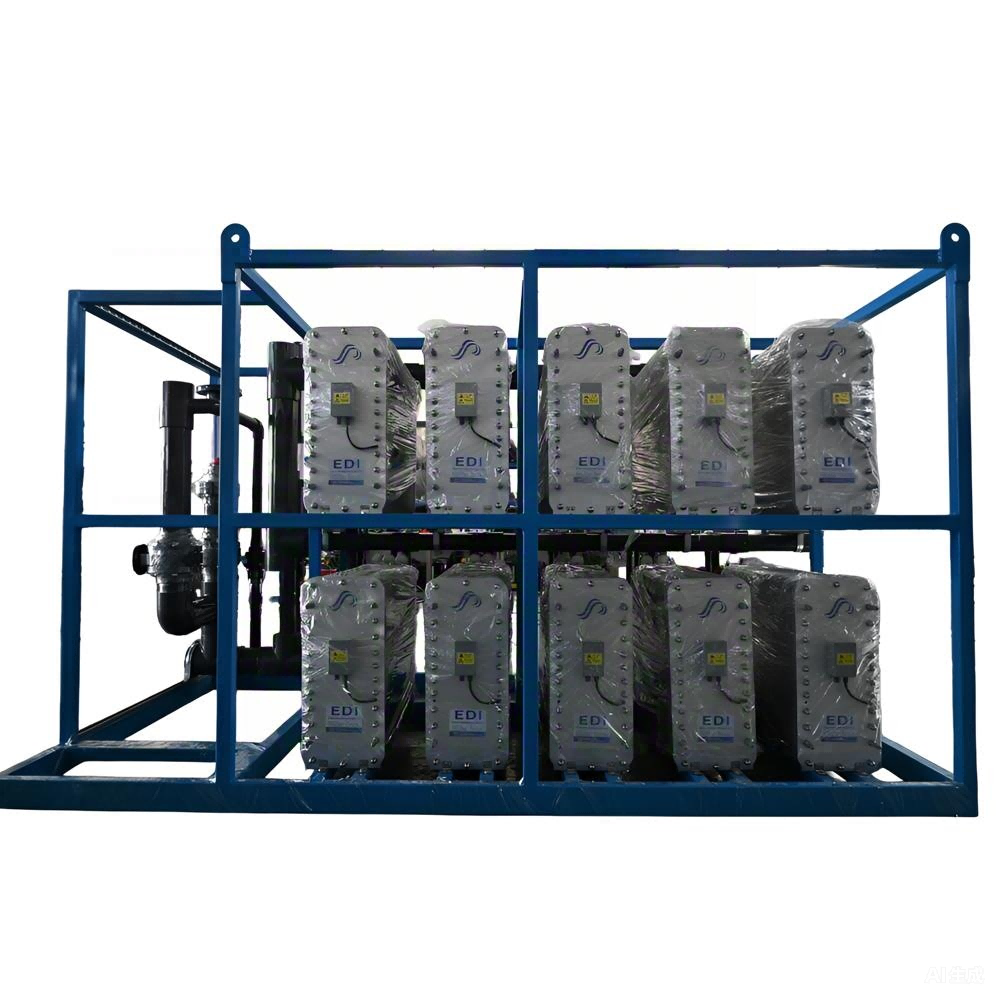
Electrodeionization System
Using secondary reverse osmosis (RO) permeate as feed water , the process employs an electric field combined with ion-exchange resins to achieve continuous deep demineralization . It operates without the need for acid or alkali chemical regeneration, enabling stable and consistent production of ultrapure water . This technology offers significant advantages, including environmental friendliness, low operating costs, and stable water quality . As a result, it has become the current mainstream core process for ultrapure water production in the industry.
Polishing Mixed Bed
A final polishing mixed bed, consisting of a homogeneous mixture of cation and anion exchange resins , is employed for terminal polishing treatment in ultrapure water systems . It can consistently elevate the product water resistivity to the ultrapure water standard of 18.25 MΩ·cm . However, once the ion exchange capacity is exhausted, the resins must be regenerated using acid and alkali solutions. Consequently, this technology is predominantly applied in sectors requiring extremely high water purity, such as precision electronics manufacturing, advanced laboratory analysis, and high-end pharmaceutical production.
How to select a purified water process?
Continuous deep demineralization is achieved using an electric field and ion-exchange resins without the need for chemical regeneration, producing zero chemical waste and ensuring environmental safety.
It offers stable water quality, continuous water production, and simple operation and maintenance, making it well‑suited for long‑term, reliable production.
The product water resistivity can reach a range of 1 MΩ·cm to 18.2 MΩ·cm, meeting the requirements of the vast majority of ultrapure water applications .
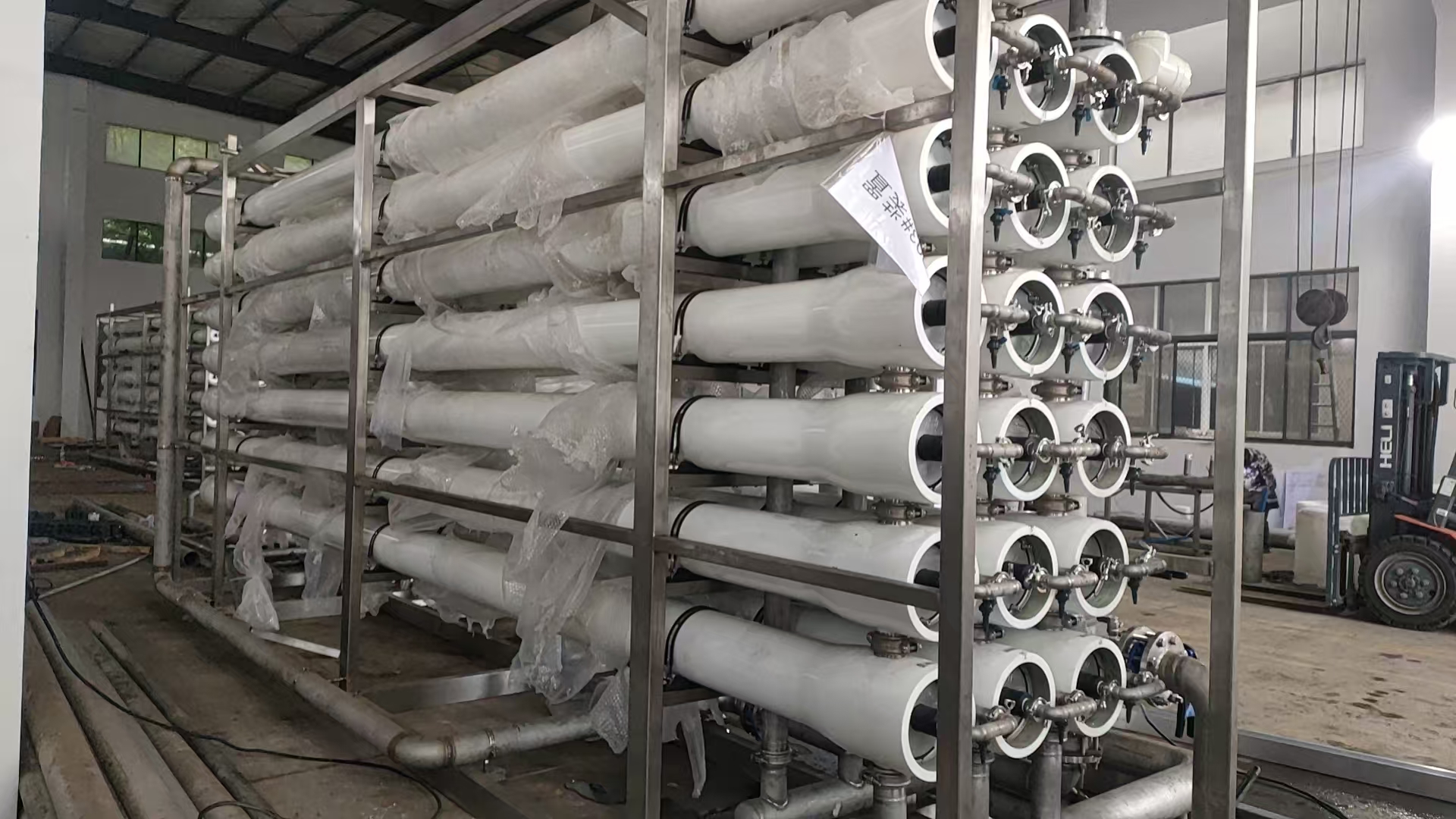
Mixed Bed Ion Exchanger
Ions are removed through ion exchange using cation and anion resins, producing high-purity water with a resistivity of up to 18.25 MΩ·cm.
Once the ion exchange resin becomes exhausted, it must be regenerated using acid and alkali chemicals, generating chemical waste streams. The regeneration process is relatively labor-intensive and involves complex operational procedures, resulting in higher operating costs.
Mostly used in terminal polishing stages with extremely high water quality requirements.
Selection Recommendations
When the key priorities are stable water quality, environmental sustainability (no chemical regeneration, zero chemical waste), low-maintenance and user-friendly operation, and reliable long-term continuous performance, Electrodeionization is the preferred technology for ultrapure water production.
For scenarios demanding the most stringent water purity standards, where acid/alkali regeneration and chemical waste treatment are permissible, either a standalone Mixed Bed Ion Exchanger or an integrated EDI + Mixed Bed polishing system is recommended.